
A car power inverter lets you use a normal wall outlet in your vehicle. It converts 12V power from the car battery into 120V AC, so you can charge a laptop, power a small TV or run a few tools on a road trip, at a campsite or at a job site. They are also useful during a power cut at home.
This hub collects every car, truck and RV inverter we have reviewed. Use the top-rated table for a fast shortlist, then read the full review of any model. The guide below explains the practical differences between plug-in models and ones that connect straight to the battery, which is where most buying mistakes happen.
Our top-rated picks
Ratings are our own scores based on the listed specs and verified buyer feedback.
How to choose a car or RV inverter
Plug-in or direct-to-battery?
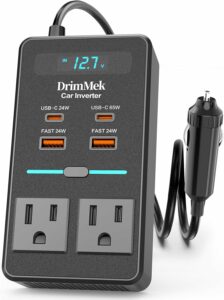
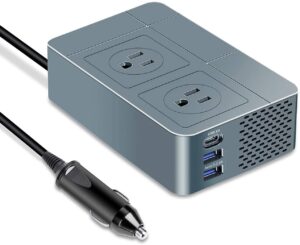
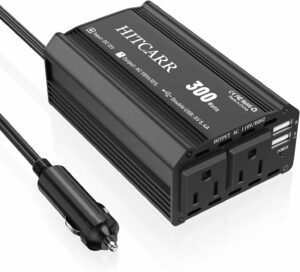
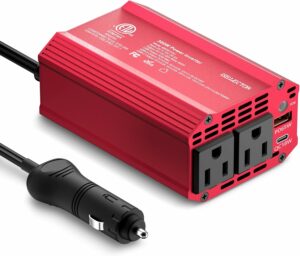
Plug-in inverters use the cigarette lighter or 12V socket. They are simple and portable, but the socket is usually protected by a fuse of around 10A to 15A. That limits you to roughly 120W to 180W, so they suit phones, laptops and cameras. Larger inverters need heavy cables clamped directly to the battery terminals.
Pick the right power rating
Add the watts of everything you want to run together. A laptop and phone charger may use 100W, while a small blender or power tool may need 300W to 700W. For microwaves, kettles and coffee makers, plan for 1500W or more and a proper battery connection.
Consider your battery and alternator
An inverter draws from the vehicle battery. With the engine off, a car battery can run down quickly under heavy loads, and you may not be able to start the car. For larger loads, run the engine, or use a second deep-cycle battery in an RV or van setup.
Pure sine wave for electronics
Pure sine wave inverters give cleaner power for laptops, camera chargers and anything with a motor. Modified sine wave models cost less and suit simple loads, but they can cause noise or heat with sensitive devices.
Safety features to look for
Good inverters have protection against overload, short circuit, over-temperature and low battery voltage. A built-in cooling fan, and a mounting spot with some airflow around it, help keep the unit cool.
What can a vehicle inverter run?
| Device | Typical power | Connection |
|---|---|---|
| Phone or tablet charger | 10–30W | Plug-in |
| Laptop | 45–90W | Plug-in |
| Small TV or game console | 60–200W | Plug-in or clamps |
| Power tool battery charger | 100–300W | Clamps to battery |
| Blender or small appliance | 300–700W | Clamps to battery |
| Microwave or coffee maker | 1000–1500W | Clamps, 1500W+ unit |
Wattages are typical figures. Always check the label on your own appliance.
Common mistakes to avoid
Many people plug a large inverter into a lighter socket and blow the fuse. If your inverter is above about 150W, connect it to the battery. Another mistake is running big loads with the engine off. A third is hiding the inverter under a seat with no ventilation, which makes it overheat.
Plug-in and compact car inverters



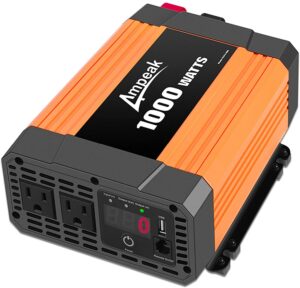
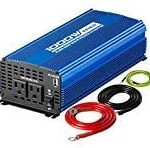
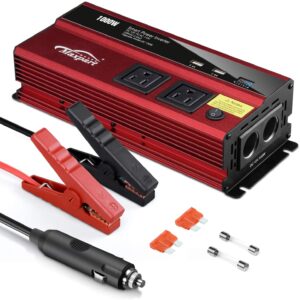
400W–1500W vehicle inverters



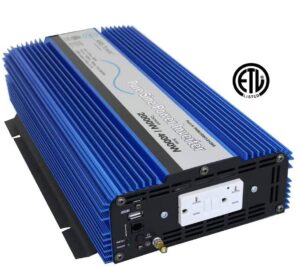
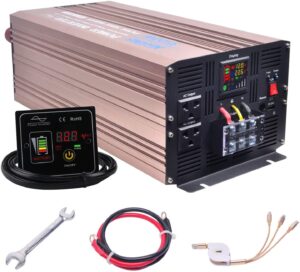
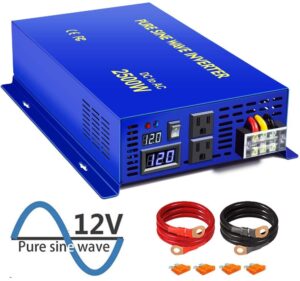
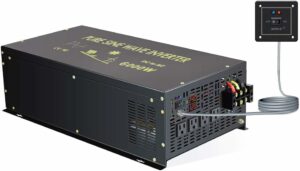
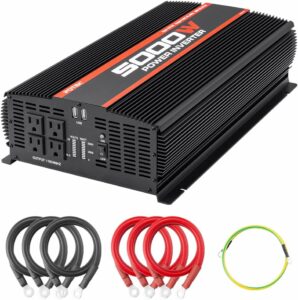
Large truck and RV inverters
Frequently asked questions
How many watts can a cigarette lighter socket handle?
Usually around 120W to 180W, because the socket circuit is often fused at 10A to 15A. Check your vehicle’s manual and fuse rating.
Will an inverter drain my car battery?
Yes, if you run it with the engine off. For anything beyond a short, light load, keep the engine running.
Can I run a microwave in my car?
Only with a large inverter, around 1500W or more, connected directly to the battery with thick cables, and ideally with the engine running.
Do I need a pure sine wave inverter?
For laptops, medical devices and audio gear, it is the safer choice. For simple chargers and lights, modified sine wave is usually fine.
Where should I mount the inverter?
Somewhere dry and ventilated, close to the battery to keep cables short, and away from fuel or flammable items.