
A small power inverter is the easiest way to get a normal wall outlet on the road, on a camping trip or during a short power cut. It takes 12V direct current from a car battery and turns it into 120V alternating current, the same kind of power your devices use at home. For laptops, phone chargers, cameras, drones and small TVs, a unit between 300W and 1000W is usually all you need.
This page brings together every small inverter we have reviewed. Instead of reading dozens of listings, you can compare ratings here, jump to the full review of any model, and use the guide below to decide what size actually makes sense. Smaller is not always worse. A compact unit is lighter, cheaper and easier to fit in a glovebox or a bag.
Our top-rated picks
| Model | Power | Our rating |
|---|---|---|
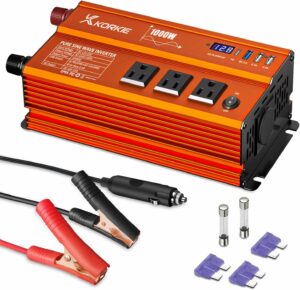
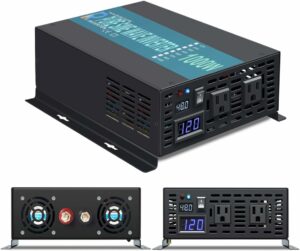
| VoltWorks 1000W Power Inverter – Pure Sine Wave DC12v to AC110V | 1,000W | ★★★★★ 4.5/5 |
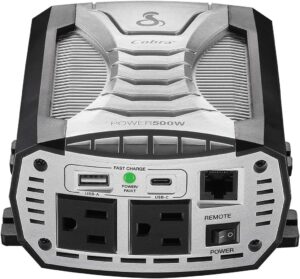
| Cobra POWER 500W Power Inverter | 500W | ★★★★★ 4.5/5 |
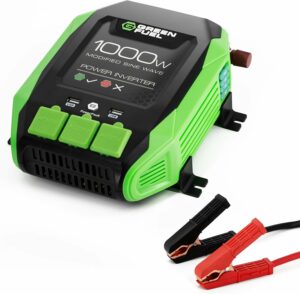
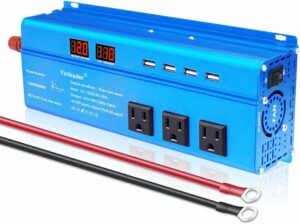
| Green Fuel 1000W Modified Sine Wave Power Inverter | 1,000W | ★★★★★ 4/5 |
Ratings are our own scores based on the listed specs and verified buyer feedback.
How to choose a small inverter
1. Add up the watts you need
Check the label on each device you plan to run and add the watts together. A laptop charger is often 45W to 90W, a phone charger 10W to 30W and a small TV 50W to 150W. Leave a margin of about 20 percent so the inverter is not working at its limit all the time. That keeps it cooler and helps it last longer.
Tools and heating devices are different. A drill can draw 500W or more, and anything that makes heat, such as a kettle or hair dryer, can need 1000W to 1800W. Those are better served by a larger inverter.
2. Look at continuous power, not the peak number
Most listings show two numbers: a continuous rating and a higher peak or surge rating. The continuous number is what the inverter can supply for hours. The peak number only covers a short start-up spike, often for a fraction of a second. When you compare models, use the continuous watts.
3. Pure sine wave or modified sine wave?
Pure sine wave inverters produce clean power that closely matches a wall outlet. They are the safer choice for laptops, medical devices, audio gear and anything with a motor or sensitive electronics. Modified sine wave inverters cost less and work fine with simple loads such as basic chargers and lights, but they can cause buzzing or heat in some equipment.
4. Check how it connects to the battery
Many small inverters plug into the cigarette lighter socket. These sockets are usually protected by a fuse of roughly 10A to 15A, which limits you to about 120W to 180W in practice, whatever the box says. For anything bigger, choose a model with clamps that connect straight to the battery terminals.
What can a small inverter run?
| Device | Typical power | Suitable size |
|---|---|---|
| Phone or tablet charger | 10–30W | Any inverter |
| Laptop | 45–90W | 150W and up |
| Small TV or monitor | 50–150W | 300W |
| Camera or drone battery charger | 30–100W | 150W and up |
| Power drill or small tool charger | 150–600W | 500W–1000W |
| Mini fridge | 50–100W, higher at start-up | 500W pure sine |
Wattages are typical figures. Always check the label on your own appliance.
Common mistakes to avoid
The first mistake is buying on the biggest number. A 1000W inverter running a 60W laptop is wasteful and a smaller unit would do the job. The second is ignoring cable length and thickness. Long, thin cables lose power and run hot. The third is running the inverter with the engine off for too long. A car battery can drain quickly, so start the engine now and then when you are drawing real power.
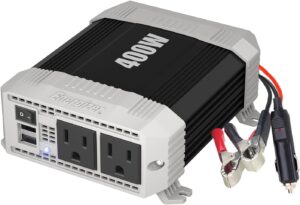
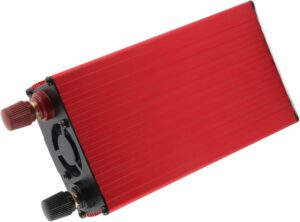
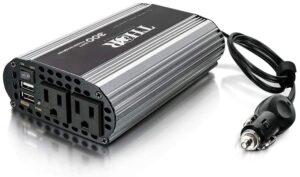
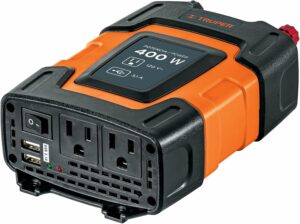
300W–400W compact inverters


500W–700W inverters


800W–1000W inverters

Frequently asked questions
Can I run a laptop on a small inverter?
Yes. Most laptop chargers draw between 45W and 90W, so even a 150W inverter can run one. A pure sine wave model is the better choice for sensitive electronics.
Will a small inverter drain my car battery?
It can. The inverter uses power from the battery whenever it is on and loaded. Keep the engine running for heavier loads, and switch the inverter off when you are not using it.
What size fuse or cable do I need?
Follow the manual for your model. As a rough guide, a 1000W inverter on a 12V battery can pull around 90A or more, so it needs thick cables and a proper fuse close to the battery.
Is 300W enough for camping?
For phones, lights, a laptop and a small speaker, yes. For a cooler, fan or cooking device, look at a larger, pure sine wave unit.
How do I know which model is best?
Start with the top-rated table below, then read the full review. We list the specs, real buyer feedback and the points that matter most for each model.