Comparing options? See our complete guide to battery-powered inverters for Dewalt, Milwaukee, Ryobi and Makita.
Quick answer: The VOLTWORKS 2 AWG Gauge Battery Inverter Cable is a power inverter.
The VOLTWORKS 2 AWG Gauge Battery Inverter Cable is more than just a piece of wire; it’s a lifeline for your adventures. Whether you’re embarking on a cross-country road trip in your Travel Trailer, powering up your startup’s equipment, or simply need a reliable connection for your truck’s accessories, this cable has got you covered.

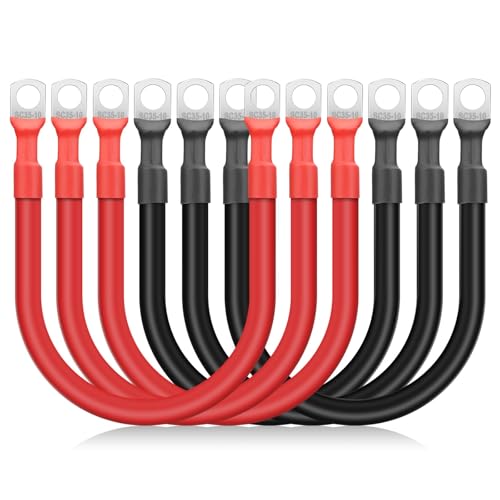
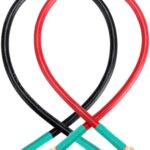
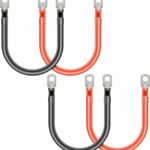
This is the VOLTWORKS 2 AWG Gauge Battery Inverter Cable as the seller shows it. It uses copper wire.
Crafted with pure copper, these cables offer superior conductivity, ensuring efficient transfer of battery voltage to your devices. The 6ft length and 3/8 in wire lugs provide ample reach and secure connections, making installation a breeze. Say goodbye to frustrating voltage drops and unreliable power sources. With the VOLTWORKS 2 AWG Gauge Battery Inverter Cable, you can confidently power your way through any challenge.
Designed with durability in mind, these cables are built to withstand the rigors of outdoor use. Whether you’re braving the elements in your RV or navigating rough terrain in your truck, these cables will remain steadfast. The included manual provides clear instructions for installation, ensuring that even those new to wiring can get up and running with ease. So, whether you’re a seasoned adventurer or just starting out, the VOLTWORKS 2 AWG Gauge Battery Inverter Cable is the perfect companion for your power needs. Read more…
The Short Version
Crafted with pure copper, these cables offer superior conductivity, ensuring efficient transfer of battery voltage to your devices. The 6ft length and 3/8 in wire lugs provide ample reach and secure connections, making installation a breeze.
What a 2 AWG cable can carry
This is a 6 ft pair of 2 AWG copper cables with 3/8 in lugs, for connecting an inverter to a battery. For 12V systems, 2 AWG is commonly used for inverters up to roughly 1000 to 1500W on a short run, where 1000W means about 95 amps. Always check the maker’s amp rating, keep the run as short as possible and fit a fuse close to the battery, because undersized cable gets hot and wastes power. Above that wattage, move to a heavier gauge such as 1/0 AWG.
Who it suits, and who should skip it
It suits owners of small to mid-size inverters who need a proper connection between the battery and the inverter. Skip it if your inverter is above about 1500W on 12V, or if you need longer runs, which need thicker cable.
Frequently Asked Questions
What does the VOLTWORKS 2 AWG Gauge Battery Inverter Cable do?
The VOLTWORKS 2 AWG Gauge Battery Inverter Cable is a power inverter.
What features does the VOLTWORKS 2 AWG Gauge Battery Inverter Cable offer?
The key specifications and features are listed in the review above, including the details shown on the product images. Check them against what you need before buying.
Who should consider the VOLTWORKS 2 AWG Gauge Battery Inverter Cable?
It suits shoppers who need a power inverter. Compare its specifications with your devices and setup to confirm it is the right fit.
How easy is the VOLTWORKS 2 AWG Gauge Battery Inverter Cable to install and use?
Follow the instructions supplied with the product. The Amazon listing, linked by the View on Amazon button at the top, shows what is included in the box and what you need to connect it.
Where can I check the current price of the VOLTWORKS 2 AWG Gauge Battery Inverter Cable?
The View on Amazon button at the top of this page links to the current listing, where you can see the latest price, availability and customer reviews.
Keep reading
- WindyNation 2 Gauge AWG Power Inverter Battery Cable
- XYZ INVT Battery Cable Inverter Cable 5AWG 48-inch
- TMH SAE Extension Cable, 18 AWG, 20FT
- VOLTWORKS 2000W Inverter
Related Posts
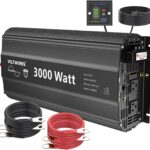
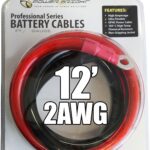
Editor's note · Nov 2026
Before you order, keep this in mind. Use thick, short cables between the battery and the inverter. Thin cables waste power and can overheat. Keep your steady load well under the rated watts. That leaves headroom and keeps the unit cooler. Look at the outlet count and plug type too. It is easy to miss until the box arrives. Test it with a small load first. Then move up to your real devices. Look at the USB ports. Some only give slow charging. To plan your setup, try our inverter size calculator.