
Heavy-duty inverters, rated above 3000W, are built for serious loads. Off-grid homes, workshops, large RVs and backup systems for a whole house or business use them. They can run several appliances at once, including well pumps, large air conditioners and workshop machines.
These are not casual purchases. The cost is higher, the wiring is heavier and the safety requirements matter more. This hub lists every heavy-duty inverter we have reviewed, with our ratings, so you can compare them side by side and then read the full review of any that look right for your setup.
Our top-rated picks
| Model | Power | Our rating |
|---|---|---|
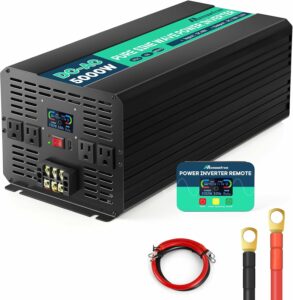
| Mxmoonfree 5000W 48V Pure Sine Wave Power Inverter | 5,000W | ★★★★★ 4.5/5 |
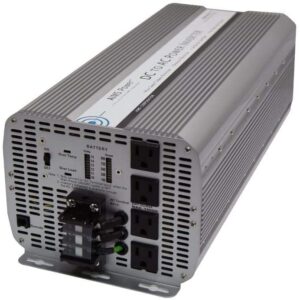
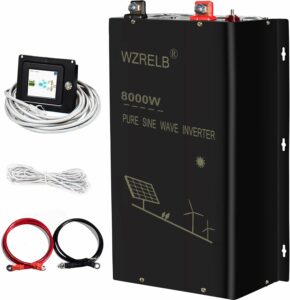
| AIMS 8000 Watt / 16,000 Watt Peak Power Inverter, Digital Meters, AC Terminal Block, Optional Remote 66 Amps (8kW) | 8,000W | ★★★★★ 4/5 |
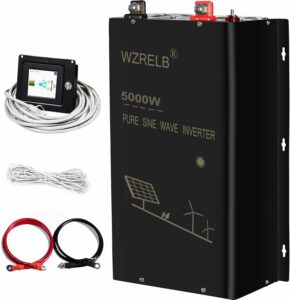
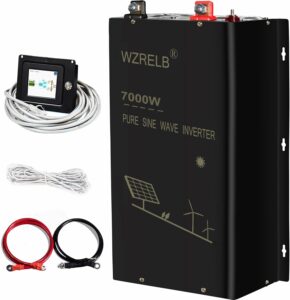
| WZRELB 7000W 36V Pure Sine Inverter | 7,000W | ★★★★★ 4/5 |
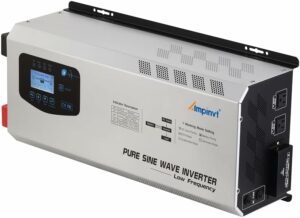
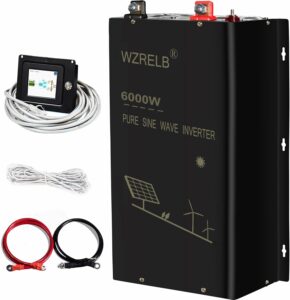
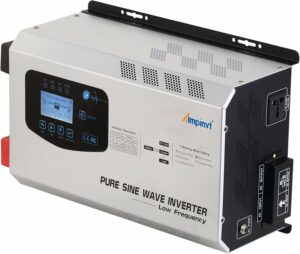
| OAE Ampinvt 6000W Pure Sine Wave Inverter | 6,000W | ★★★★★ 4/5 |
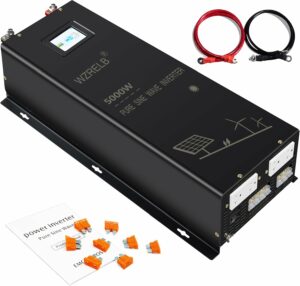
| WZRELB 5000W 24V to 120/240V Inverter | 5,000W | ★★★★★ 4/5 |
Ratings are our own scores based on the listed specs and verified buyer feedback.
How to choose a heavy-duty inverter
Battery voltage matters even more
At these power levels, a 12V system becomes impractical. A 4000W load at 12V would draw over 300A, which needs enormous cables. Most heavy-duty inverters are built for 24V or 48V, which cuts the current and makes the whole system safer, cooler and more efficient. If you are designing a new system, 48V is a common choice for loads above about 4000W.
Check the output type
Some large inverters give a single 120V output. Others provide split-phase 120V and 240V, which lets them run larger tools, well pumps and some air conditioners. Check what your appliances require before you buy, and confirm the output voltage matches your country’s standard.
Think about continuous load and surge together
Large motors have large start-up currents. Pick an inverter whose surge rating covers your biggest motor, and whose continuous rating covers everything running at the same time. A margin of 20 to 25 percent keeps the unit running cooler and extends its life.
Safety and installation
Heavy-duty inverters should be installed with correctly sized cables, fuses or breakers and a proper ground. If the inverter will feed a building, use an approved transfer switch so that power cannot flow back into the grid. We strongly recommend having a qualified electrician plan and check the installation and follow your local electrical code.
What can these inverters run?
| Load | Typical power | Suitable size |
|---|---|---|
| Large well pump | 1000–2000W (high surge) | 3500W–5000W |
| Central or large window AC | 1500–3500W | 4000W–6000W |
| Table saw or large compressor | 1500–3000W (high surge) | 4000W–5000W |
| Whole-home essentials (fridge, lights, TV, fan) | 1000–2500W | 3500W+ |
| Workshop with several tools | 3000–5000W | 6000W+ |
Wattages are typical figures. Always check the label on your own appliance.
Common mistakes to avoid
A common error is forgetting that the battery bank has to match the inverter. A 5000W load can empty a modest battery bank in minutes. Another is using cables that are too thin or too long, which wastes power and creates a fire risk. A third is mixing up the inverter’s continuous watts with its peak watts when planning for large motors.
3500W–5000W inverters


6000W and larger inverters

Frequently asked questions
What battery voltage should I use above 3000W?
24V or 48V is much more practical than 12V. A higher voltage lowers the current, so cables stay manageable and the system runs cooler.
Can a 5000W inverter run a whole house?
It can run the essentials, such as a refrigerator, lights, TV and a few outlets, but not everything at once. Add up the loads you actually need and plan around them.
Do I need an electrician?
For anything connected to house wiring, yes. A transfer switch and correct grounding are critical for safety.
Is split-phase output necessary?
Only if you need 240V appliances, such as some well pumps or large tools. Many setups work fine with 120V output.
How do I choose between brands?
Compare continuous watts, surge rating, battery voltage, waveform and warranty, then read the buyer feedback in each review.